If you’ve just started eating low-carb, you’ve probably seen two numbers floating around: total carbs and net carbs. Recipes list one, apps show the other, and labels seem to disagree with both.
Here’s the short version: net carbs are the carbohydrates your body digests and absorbs. On a US label, you get there by taking total carbohydrates and subtracting fiber (and, in some cases, certain sugar alcohols). This guide shows exactly how, with real foods and a recipe you can follow.
In this article
The basic formula
The formula
Net carbs = Total carbohydrates − Dietary fiber − (some) Sugar alcohols
Why subtract fiber? Fiber is a carbohydrate, but humans can’t break most of it down into sugar, so it has little effect on blood sugar. It still matters for digestion and fullness — it just isn’t counted toward your carb budget.
“Net carbs” isn’t an official term defined by the FDA, which is why you’ll see different numbers from different brands. Calculating it yourself from the Nutrition Facts panel is the most reliable approach.
Shopping outside the US?
In the UK, EU and Australia, the “carbohydrate” figure on labels already excludes fiber, which is listed separately. Don’t subtract fiber twice — the carbohydrate number on those labels is effectively net carbs.
Step by step with a label
Let’s use a typical low-carb tortilla label as an example:
| Nutrition Facts (1 tortilla) | Amount |
|---|---|
| Total carbohydrate | 19 g |
| Dietary fiber | 15 g |
| Total sugars | 0 g |
| Sugar alcohols | — |
- Find total carbohydrate: 19 g.
- Find dietary fiber: 15 g.
- Subtract: 19 − 15 = 4 g net carbs per tortilla.
- Check the serving size. If you eat two, that’s 8 g.
That last step is where most people go wrong. A bag of nuts might list 3 g net carbs — per 28-gram serving, not per handful straight from the bag.
Real food examples
Whole foods don’t come with labels, so here are common low-carb foods worked through. Values are based on USDA FoodData Central and rounded.
| Food | Portion | Total carbs | Fiber | Net carbs |
|---|---|---|---|---|
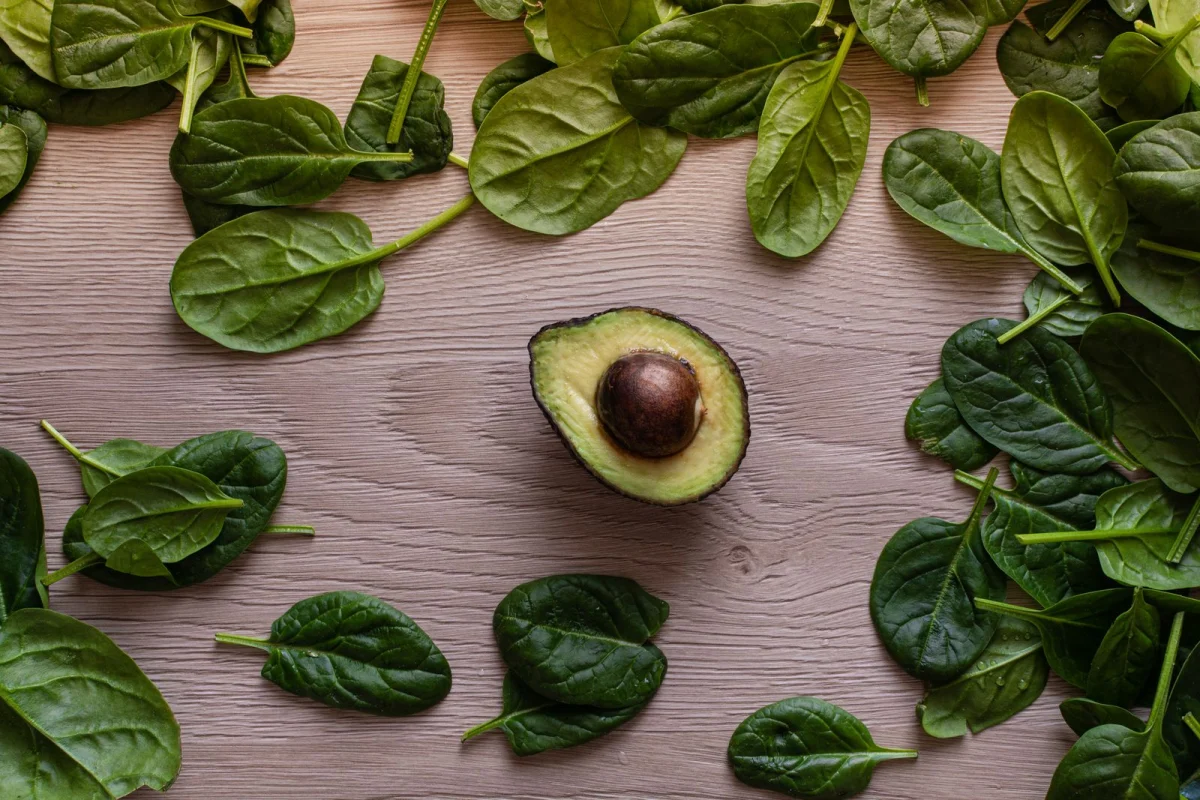
| Avocado | ½ medium (100 g) | 8.5 g | 6.7 g | 1.8 g |
| Spinach, raw | 1 cup (30 g) | 1.1 g | 0.7 g | 0.4 g |
| Broccoli, raw | 1 cup chopped (91 g) | 6.0 g | 2.4 g | 3.6 g |
| Almonds | 1 oz (28 g) | 6.1 g | 3.5 g | 2.6 g |
| Chia seeds | 1 oz (28 g) | 12 g | 9.8 g | 2.2 g |
| Raspberries | 1 cup (123 g) | 14.7 g | 8.0 g | 6.7 g |
| Blueberries | 1 cup (148 g) | 21.4 g | 3.6 g | 17.8 g |
| Apple | 1 medium (182 g) | 25.1 g | 4.4 g | 20.7 g |
A few patterns jump out:
- High-fiber foods shrink dramatically. Chia seeds look carb-heavy on paper but end up very low.
- Berries aren’t all equal. A cup of raspberries is about a third of the net carbs of a cup of blueberries.
- Most fruit is high even after subtracting fiber, which is why keto plans limit it.
What about sugar alcohols?
Sugar alcohols are sweeteners such as erythritol, xylitol, maltitol and sorbitol. They’re carbohydrates, but your body absorbs them to very different degrees.
| Sweetener | How it’s usually counted | Notes |
|---|---|---|
| Erythritol | Subtract fully | Minimal effect on blood sugar for most people |
| Allulose | Subtract fully | Technically a rare sugar; the FDA excludes it from “total sugars” on labels |
| Xylitol | Subtract about half | Highly toxic to dogs — keep it away from pets |
| Maltitol | Subtract about half (some people count it fully) | Raises blood sugar more than others and often causes stomach upset |
| Sorbitol | Subtract about half | Can cause bloating in larger amounts |
Worked example — sugar-free chocolate bar:
- Total carbohydrate: 20 g
- Dietary fiber: 3 g
- Sugar alcohols (erythritol): 14 g
- Net carbs: 20 − 3 − 14 = 3 g
Same bar, sweetened with maltitol:
- Total carbohydrate: 20 g, fiber 2 g, maltitol 15 g
- Counting half the maltitol: 20 − 2 − 7.5 = 10.5 g
That’s a big difference for two products that look the same on the shelf. If the label doesn’t say which sugar alcohol is used, check the ingredients list.
Calculating net carbs for a recipe
For homemade food, add up the ingredients, then divide by the number of servings. Here’s a spinach and feta omelet for one:
| Ingredient | Total carbs | Fiber |
|---|---|---|
| 2 large eggs | 0.7 g | 0 g |
| 1 cup raw spinach | 1.1 g | 0.7 g |
| 1 oz feta | 1.2 g | 0 g |
| 1 tbsp butter | 0 g | 0 g |
| ¼ cup diced onion (40 g) | 3.7 g | 0.7 g |
| Total | 6.7 g | 1.4 g |
Net carbs: 6.7 − 1.4 = about 5.3 g. Swap the onion for a tablespoon of chives and it drops to roughly 2 g — a good example of how one ingredient can make the difference.
For a recipe that makes four servings, divide the totals by four. A kitchen scale makes this much more accurate than cups and spoons, especially for nuts, cheese and vegetables.
Common mistakes
- Ignoring serving size. The most common error by far.
- Forgetting sauces, dressings and drinks. A tablespoon of ketchup has about 5 g of carbs; a flavored latte can have 30 g or more.
- Trusting “0 g” too much. US rules allow foods with less than 0.5 g of carbs per serving to be labeled 0 g. Sweetener packets and sprays can add up if you use a lot.
- Double-subtracting fiber on UK or EU labels, where carbohydrate already excludes it.
- Assuming every “keto” product is low in net carbs. Do the math yourself.
Net carbs or total carbs — which should you track?
Most keto plans use net carbs, often aiming for roughly 20–50 g per day, and many people find net carbs easier because it encourages high-fiber vegetables. Some people, including some managing diabetes, prefer to track total carbs for a stricter margin.
If you have diabetes or take medication that lowers blood sugar, work out your approach with your doctor or diabetes care team. Changing your carb intake can change how much medication you need.
Frequently asked questions
Why don’t my app and the label agree?
Apps pull data from different databases and user entries, which can be outdated or wrong. For packaged foods, the label on your actual product is the most reliable source.
Do I need to count net carbs forever?
Many people count carefully for the first few weeks to learn portion sizes, then track more loosely. If you notice your intake creeping up, a few days of tracking helps you recalibrate.
Are net carbs the same as ‘impact carbs’?
They’re closely related marketing terms. Both try to describe carbs that affect blood sugar. Because neither is officially defined, it’s best to do the calculation yourself.
Should I count carbs in vegetables?
Yes, though non-starchy vegetables are low enough that most people don’t worry about leafy greens. Starchier vegetables like onions, carrots and peppers are worth measuring.
The bottom line
Net carbs are simple once you’ve done the math a few times: total carbs minus fiber, minus the right share of sugar alcohols, multiplied by however many servings you actually eat. Use labels for packaged foods, a nutrition database for whole foods, and a scale when accuracy matters.
Ready to put it into practice? Try our 30 keto breakfast ideas under 5 net carbs, or stock up with our keto grocery list.